
A sudden drop in Google rankings is usually caused by one of six things: a core update, a manual action, a technical fault like an accidental noindex tag, a lost backlink, a shift in SERP layout, or a competitor simply outranking you. The distinction that matters is scope — a drop across every page points to something site-wide and technical, while a drop on one or two keywords points to content or competition.
TL;DR:
- Most sudden drops trace to six causes: core update, manual action, technical fault, lost backlinks, SERP layout change, or a sharper competitor.
- Search volume isn't falling — Google results are just answering more queries directly, which can make traffic drop while rankings don't.
- A manual action is the one cause Google tells you about by name, in the Manual Actions report. Everything else you diagnose yourself.
- Apply the 80/20 rule: find the small set of pages carrying most of your traffic and fix those first, not the whole site at once.
- Core update rollouts take one to two weeks to finish — don't rewrite your homepage on day three of a drop.
Table of Contents
- The Six Causes Behind a Sudden Drop in Google Rankings
- Is It a Real Drop, or Just the SERP Changing Shape?
- Core Update, Manual Action, or Broken Page: How to Tell Which Hit You
- The 80/20 Rule: Why One Page Is Probably Your Whole Problem
- What Actually Moves Rankings in 2026
- Getting Ranked Again: The Order of Operations
- Catch a Ranking Drop the Day It Starts, Not the Quarter After
- Frequently Asked Questions
- Sources
The Six Causes Behind a Sudden Drop in Google Rankings
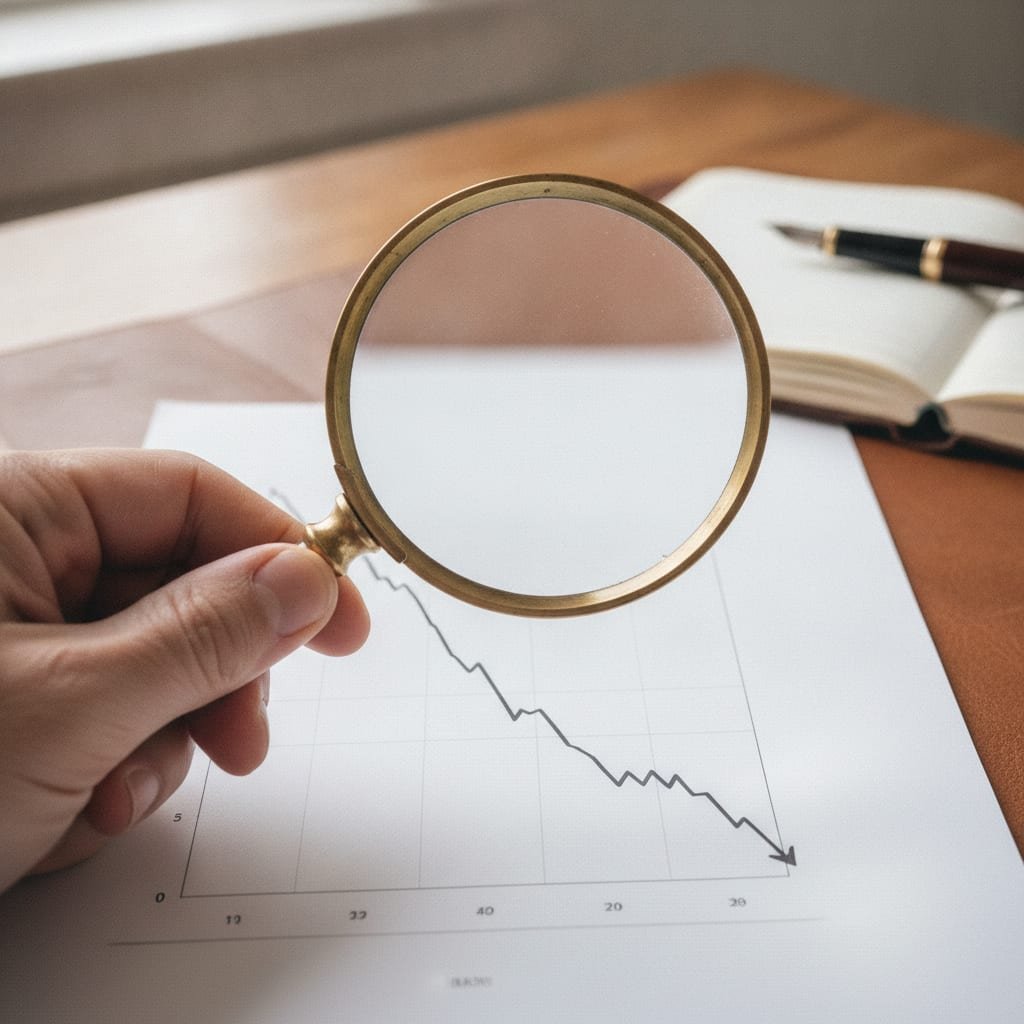
Before you touch anything, separate what happened from what you assume happened. Nearly every sudden ranking drop comes down to one of six causes, and each one leaves a distinct fingerprint in your data.
- A core update. Google runs several broad core updates a year that re-weight how it judges content quality and relevance across the entire index. These don't target your site specifically — they reassess everyone, and some sites that were previously overperforming simply get corrected.
- A manual action. A human reviewer at Google found a policy violation — thin content, unnatural links, cloaking — and applied a penalty directly to your site or a section of it.
- A technical fault. A deploy pushed a stray
noindextag, broke a redirect chain, or returned 404s on pages that used to rank. This is the most common cause of a drop that looks catastrophic but is actually a one-line fix. - A lost backlink or referring domain. A high-authority site that linked to you got deindexed, redesigned, or removed the link during a content cleanup, and your page lost the authority signal that was holding its position.
- A SERP layout change. Google added an AI Overview, a new featured snippet, or additional ads above your result. Your position in the organic list didn't move, but your visible real estate and click share did.
- A sharper competitor. Someone rewrote their page, built better internal links, or earned new citations, and Google now considers theirs the better answer for that specific query.
A manual action notice in Search Console is the only cause on this list Google tells you about directly. Everything else — core updates, technical faults, lost links — you have to find yourself.
Is It a Real Drop, or Just the SERP Changing Shape?

Are Google searches declining? No — global search volume has continued to grow, not shrink. What has changed is how many of those searches end without a click. Research from SparkToro on zero-click search behavior has tracked a rising share of queries where the user gets their answer from an AI Overview, a featured snippet, or a knowledge panel and never visits a website at all. If your organic click numbers fell while your actual position in the results stayed the same, you're not looking at a ranking drop — you're looking at a demand-capture problem, and the fix is different: richer schema, more specific headings, and content built to be the source an AI Overview cites, not just a link beneath it.
This distinction matters because most site owners open Google Analytics first and panic at a traffic chart, when the chart that actually tells you what happened is the Performance report in Search Console filtered by query and date. If average position held but clicks dropped, the SERP changed shape. If average position dropped, something actually happened to your ranking, and you need to find out what.
Core Update, Manual Action, or Broken Page: How to Tell Which Hit You

Each cause shows up differently in your tools. Use this to narrow it down before you start making changes.
| Cause | Typical speed | What Search Console shows | How to confirm it |
|---|---|---|---|
| Core update | Rankings shift gradually over one to two weeks | No manual action or security flag; broad, cross-query movement in Performance | Check the Google Search Status Dashboard for an active rollout |
| Manual action | Drop appears within a day or two of a Google review | Manual Actions report names a specific violation | Read the report directly — Google states the reason |
| Technical fault (noindex, 404, bad redirect) | Overnight, tied to a deploy date | Coverage report shows pages newly excluded; Performance shows a cliff on an exact date | Crawl the URLs and check header status codes and meta robots tags |
| Security issue | Sudden, site-wide | Security Issues report flags malware or hacked content | Check the report and your server logs for unfamiliar file changes |
| Lost backlinks | Looks gradual but can present as sudden if one major domain is deindexed | No direct console signal; referring domain count drops | Compare referring domain counts month over month |
If none of these match and the drop is confined to one or two keywords, it's almost always a competitor — run the query yourself and read what currently outranks you.
The 80/20 Rule: Why One Page Is Probably Your Whole Problem
The 80/20 rule in SEO is the same Pareto principle applied everywhere else: a small share of your pages, usually somewhere around 20 percent, generates the large majority of your organic traffic and revenue. When a drop hits, the efficient move isn't to audit the entire site — it's to pull your Search Console data by query and page, sort by lost clicks, and find the handful of URLs responsible for most of the damage. Fixing three pages that each lost 2,000 monthly clicks matters more than fixing thirty pages that each lost twenty.
This is also why a site-wide audit after a drop so often wastes a week: it treats every page as equally worth investigating when the data already tells you which ones are. A buyer's breakdown of rank tracking tools is useful here specifically because it shows how to segment keywords by value before you start chasing every position change equally.
Pro Tip: Before investigating pages individually, check whether the affected URLs share a template, an internal-linking block, or a piece of shared schema. A mass drop across dozens of unrelated pages is rarely dozens of unrelated problems — it's almost always one broken include file, one removed navigation link, or one bad deploy that touched every page built from the same template.
What Actually Moves Rankings in 2026
Google's own ranking systems guide describes ranking as the output of many systems working together, not one formula, but a few factors consistently carry the most weight.
- Crawlability and indexability first. None of the rest matters if the page returns a 404, carries a stray noindex tag, or sits behind a broken redirect — this is also the single most common cause of a drop that looks algorithmic but is actually a bug.
- Helpful, experience-backed content. Google's helpful content and E-E-A-T guidance rewards pages written by someone with demonstrable first-hand experience or expertise on the topic, not just pages that cover the keyword.
- Page experience signals. Core Web Vitals, mobile usability, and intrusive interstitials still factor into ranking, particularly for competitive queries where content quality is otherwise close.
- Link signals, still, but relatively. Backlinks remain a trust signal, but their weight has declined relative to content relevance and user satisfaction signals over the last several core updates.
- Mobile-first indexing by default. Google indexes and ranks almost every site based on its mobile version, which means a desktop-only check of your rankings misses what Google is actually basing its decision on.
Getting Ranked Again: The Order of Operations
How do you get your Google ranking up after a drop? Work in this order, not all at once.
- Confirm scope. Is it one keyword, one page, or site-wide? This tells you whether you're hunting a content problem or a technical one.
- Check Search Console's own reports before reading forum threads. Manual Actions and Security Issues will tell you directly if either applies.
- Fix technical problems first. A noindex tag or broken redirect takes minutes to fix and can recover rankings within days once Google recrawls.
- Wait out a confirmed core update.
Google's own Search Central documentation notes that a core update rollout can take one to two weeks to fully complete — rewriting your homepage on day three means you're reacting to a rollout that isn't finished yet.
- Rebuild authority deliberately, not frantically. If you lost a key referring domain, earn a comparable replacement rather than mass-emailing for low-quality links, which core updates have repeatedly been shown to discount.
- Track daily while you're actively recovering, then drop to weekly once positions stabilize. Checking a stable keyword set every day wastes money on data you don't need — a point worth understanding fully in a comparison of self-hosted versus SaaS rank tracking, since the right check frequency changes which pricing model actually wins.
Catch a Ranking Drop the Day It Starts, Not the Quarter After
Most of the diagnosis above depends on having page-level history, not just position history — knowing that a page returned a 404 on Tuesday is more useful than knowing it dropped from position 4 to position 11 at some point last week. ReplaRank is built around that: a self-hosted rank tracker, $399 once instead of a monthly fee, that checks 404s, redirects, noindex tags, and canonical issues alongside position history, and syncs daily with Search Console so you can see actual clicks and impressions, not just rank. It covers mobile and desktop tracking across 35 countries, and it runs on your own server, so you own the data and aren't locked into a subscription to keep seeing it.
The honest caveat: a fresh rank check costs roughly 1.6 cents through the data provider, billed to you directly at cost. If you're tracking 500 keywords daily, that's around $240 a month — more than a subscription like Wincher's Basic plan at $49. ReplaRank wins clearly on weekly checks, smaller keyword sets, and not paying forever for a tool you'll use for years; check the numbers against your own check frequency before buying.
Frequently Asked Questions
Are Google searches declining?
No — overall global search volume has continued to grow. What's changed is that a larger share of searches now end without a click, because AI Overviews and featured snippets answer the query directly on the results page, as tracked by research from SparkToro. A flat or falling traffic number doesn't always mean your rankings fell; check your actual average position in Search Console before assuming a drop.
How do you get your Google ranking up?
Confirm the cause first — manual action, technical fault, or content gap — rather than guessing and rewriting pages at random. Fix whatever Search Console reports directly, rebuild any lost links deliberately, and give algorithmic shifts one to two weeks to finish before making further changes.
What is the 80/20 rule in SEO?
It's the observation that a small share of your pages, often around 20 percent, drive the large majority of your organic traffic and revenue. After a drop, sorting pages by lost clicks and fixing that top segment first recovers more value than auditing the entire site evenly.
What are the most important factors for Google ranking in 2026?
Crawlability and indexability come first, since no other signal matters if a page can't be indexed. After that, helpful and experience-backed content, page experience signals like Core Web Vitals, and link signals still carry weight, though content relevance now outweighs raw link counts in most core updates.
How long does it take to recover from a sudden ranking drop?
A technical fix, like removing a stray noindex tag, can recover rankings within days once Google recrawls the page. A drop tied to a core update or lost authority signals typically takes weeks to months, since it depends on the next update cycle or on rebuilding comparable links.
Can a hosting or server outage cause a sudden ranking drop?
Yes — if Googlebot repeatedly fails to reach your site during a crawl, pages can be temporarily dropped from the index until crawling succeeds again. Check your server logs and the Coverage report in Search Console for a spike in server errors around the date the drop began.
Sources
- Google Search Status Dashboard | Google
- Manual Actions report | Google Search Console Help
- Security Issues report | Google Search Console Help
- How Google Search ranking works | Google Search Central
- Zero-click search research | SparkToro